
Floyd 72 Hour Feed Finding
The official Floyd County Sheriff’s Office site did not expose a 72-hour release view, roster archive, or published retention period. No county source established what fields such a feed would display, how often it would refresh, or whether it would include a booking photo. The result is a genuine data gap.
Do not fill it with three current-inmate screenshots. A current roster describes confinement at its update time. Recent arrest posts describe bookings, not exits. Commercial lists may carry unclear timestamps. None can establish a lawful release transaction for Floyd County.
Build Floyd’s Three-Day Window
Set the range before searching. Write down the start and end date, including the local time zone. Then check each known person against the agency that last held them. A release late on the first evening and a court order on the third morning both belong in the range, even when an online file appears later.
- Search the Kentucky VINE local-jail record for the person and read the date released.
- Contact Floyd County Detention Center for its release-record procedure and the physical custody event.
- Ask the Floyd Circuit Court Clerk for the bond, release, judgment, sentence, or later order.
- For DOC-linked people, inspect each Daily Releases PDF touching the three-day range and search KOOL.
- Preserve the source, access date, and exact status instead of merging unlike events into one label.
The Released Last 24 Hours page is better when only the latest same-day event matters. The three-day process is designed for a wider date sweep.
Floyd Weekend Release Gaps
A three-day window often crosses a weekend or holiday. Kentucky DOC Daily Releases is date indexed, but its files can follow business-day publishing patterns. One PDF date should not be assumed to contain every county exit from the prior calendar day. Search every relevant file and allow for a later posting.
VINE is closer to a live person-specific channel, yet it is not a list of all Floyd County releases. Data can lag or be entered incorrectly. Court orders may show why release was authorized, while the jail transaction is stronger evidence of when the person physically left. These records answer different parts of the event.
No Floyd policy was found for weekend release hours, holiday timing, a family waiting area, transportation, property pickup, or a release door. Obtain those facts directly from the detention center before relying on them.
Floyd 72 Hour Record Fields
With no standardized public feed, a requester should define the fields needed for each release during the date range. The request should describe existing logs or transactions and allow the custodian to redact exempt material while producing the rest.
| Field | Why it matters |
|---|---|
| Full name and identifier | Separates people with similar names |
| Booking or admission number | Ties the event to one custody stay |
| Effective release date and time | Shows whether the event falls in the 72-hour span |
| Release type or authority | Distinguishes bond, time served, court order, discharge, and transfer |
| Released From | Names the physical facility in a DOC record |
| Destination or next status | Helps separate community release from transfer when public |
Ask for the booking sheet, custody-status history, release transaction, releasable destination, and release authorization for a stated date range. Floyd’s reviewed official site does not publish a dedicated form or fee schedule, so confirm the current method and cost with the custodian.
Floyd Release Systems Compared
The best source depends on the last custody system. An ordinary pretrial release from Floyd County Detention Center belongs on the jail, court, and local VINE path. A state prisoner at that jail or Southeast State Correctional Complex may also appear in KOOL, VINE’s DOC record, and Daily Releases. Federal and immigration systems are separate.
| Source | Useful 72-hour evidence | Limit |
|---|---|---|
| Local VINE record | Date released and reporting agency | One person at a time; possible lag |
| Floyd jail record | Physical release transaction and time | Must be requested or confirmed |
| Floyd court record | Legal order and disposition | May not show exact exit time |
| DOC Daily Releases | DOC number, release type, Released From | Only DOC-linked people |
| KOOL | Status, location, and state offender details | Not every county booking |
A transfer from the Floyd jail to a prison is not community release. A KOOL location formatted as a Probation and Parole district points to supervision, not full discharge.
Federal Releases Near Floyd
Floyd County has no federal prison in the reviewed facility map. Even so, a person connected to Floyd may have been in federal custody elsewhere. The Federal Bureau of Prisons Inmate Locator can show a past release date or a Released/Not in BOP Custody result for federal records.
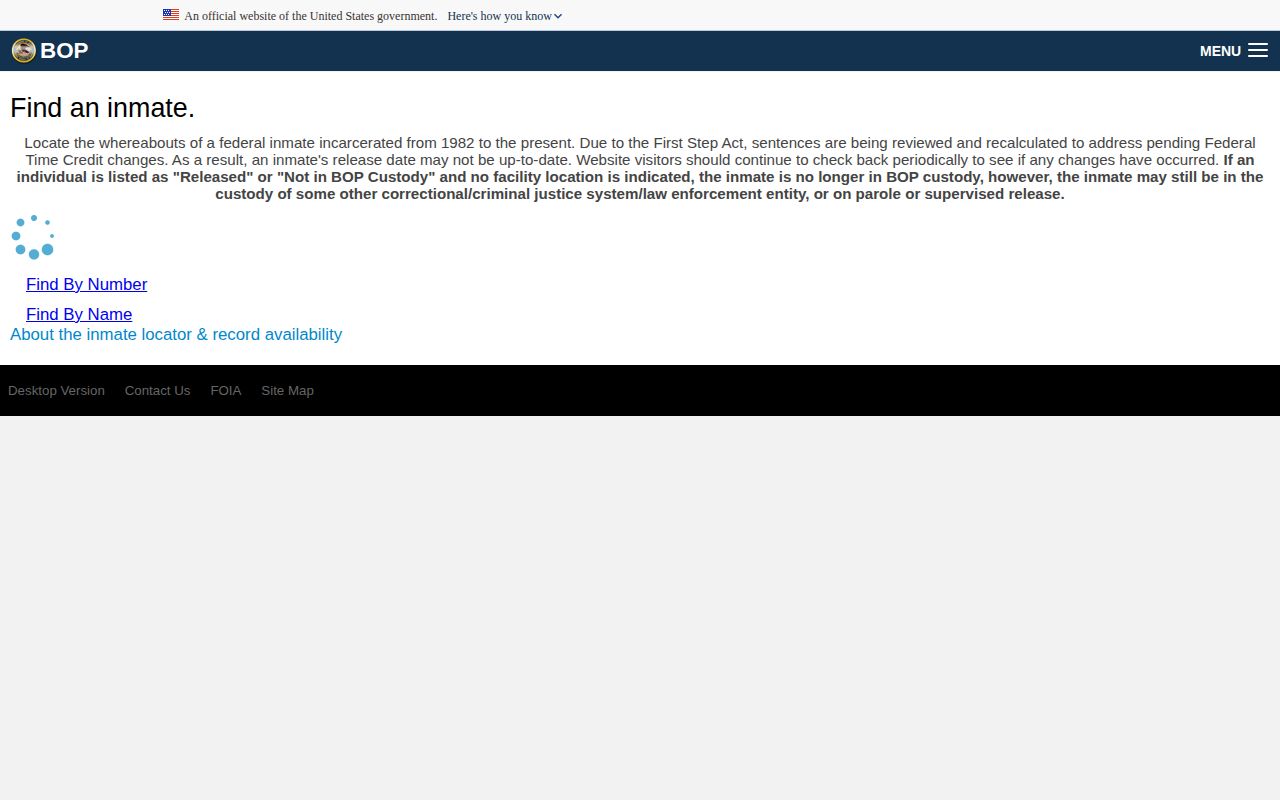
The image documents the federal locator channel. A BOP release means BOP custody ended. It does not rule out state, local, immigration, or community supervision. For federal pretrial or transport custody, use the federal court order and a focused U.S. Marshals Service request because USMS has no public person locator like BOP.
ICE’s locator is also separate and generally has only a limited horizon for released records. Immigration release may still involve check-ins or an alternative-to-detention program.
Verify Floyd Missing Results
A no-result has weak meaning. In VINE it may reflect a name mismatch, separate local and DOC records, agency participation, or data lag. In KOOL it may mean the person never entered Kentucky DOC jurisdiction. A missing court result can reflect clerk access limits, the wrong county, sealing, expungement, confidentiality, or retention.
Use independent sources. A strong three-day confirmation pairs an agency release status and date with the controlling legal order and a custody or supervision transition. If the records conflict, retain screenshots and access dates, then contact the responsible custodian. Do not choose the result that happens to fit the expected date.
Note: “Released” should retain its qualifier, such as bond, home incarceration, parole, discharge, or transfer, whenever the source supplies one.
Request Floyd Three-Day Logs
A records request can define the missing county interval without asking the jail to invent a new report. State the start and end dates and request any existing release log or custody transactions for that span. For a named person, add the booking sheet, custody-status history, effective release date and time, release type or authority, and releasable transfer destination. The agency may redact exempt fields while producing the remainder.
The Floyd sheriff site did not provide a dedicated jail open-records form, published fee, or records email in the reviewed material. Confirm the current custodian and delivery method before sending the request. Kentucky open-records law generally requires an agency response within five business days, subject to statutory extensions and an explanation. That rule governs the response, not the time of the underlying release.
Older court records may be held outside the clerk’s office or lawfully destroyed under a retention schedule. The Floyd Circuit Court Clerk must supply locator information when a file is at the State Records Center because that center cannot search only by a person’s name. Sealed, expunged, juvenile, medical, protected victim, and security-sensitive material may not be available.
The legal meaning also belongs in the three-day log. Bond means release under pretrial terms, not the end of the charge. Time served ends the stated jail term, though supervision or another case may remain. Home incarceration ends the jail stay while court limits continue. Transfer means another custodian took charge.
Keep the agency’s wording. Parole, mandatory reentry supervision, and discharge are different state outcomes. A Parole Board grant can begin processing, but it is not the physical exit time. KOOL, VINE, Daily Releases, and the facility record should agree before the event is treated as complete.